Life, hardship, and perseverance among the early settlers of the Main Salmon River country.
Where the River Ran Wild
Long before roads were cut through the canyon walls, a handful of stubborn, visionary souls staked their futures on one of the most remote and unforgiving rivers in North America.
The Main Salmon River earned its famous nickname, the “River of No Return,” not as poetry, but as plain fact. For the earliest settlers who ventured into its canyon in the late 1800s, once you floated in on the powerful current, there was no way to row a boat back upstream against its fury. You were committed. Life in the Salmon River country demanded exactly that kind of total commitment.
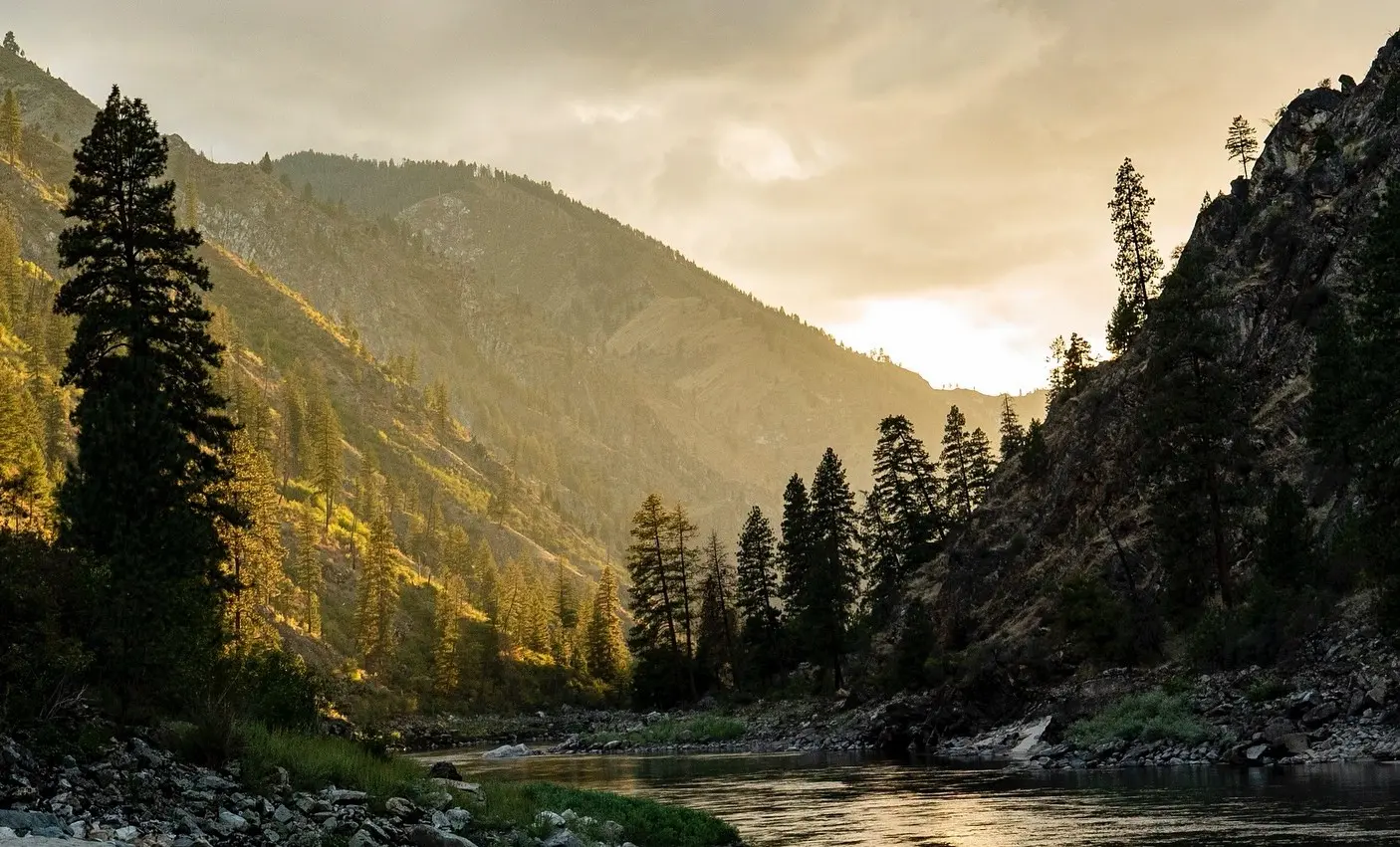
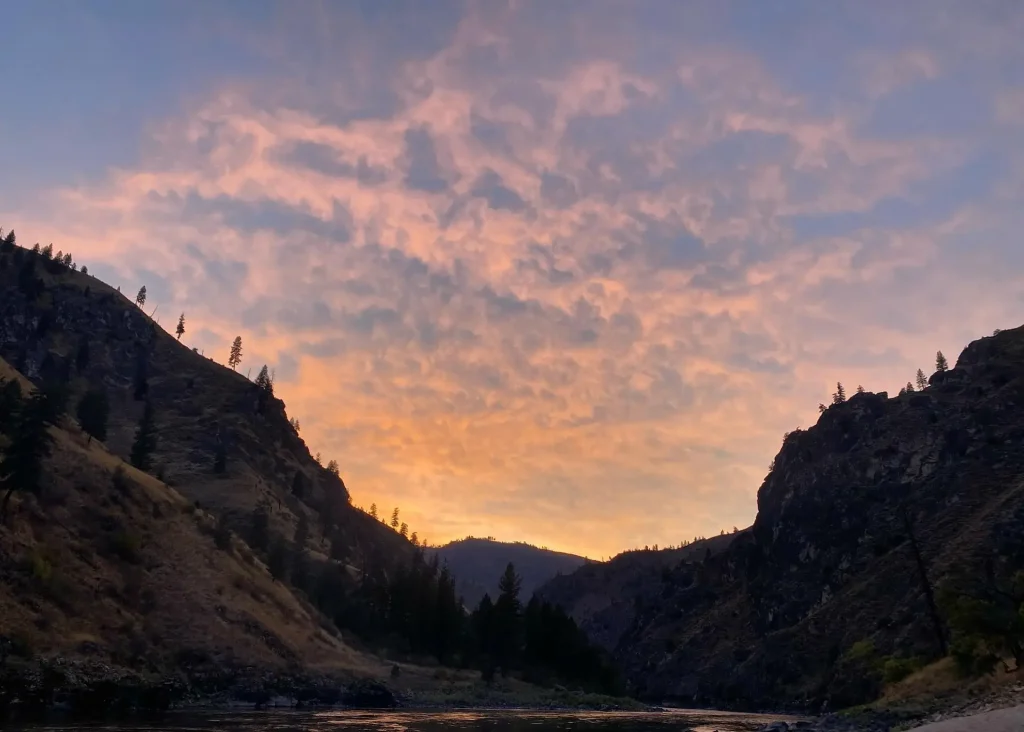
Cutting through the heart of central Idaho, the Main Salmon carves one of the deepest river gorges in North America. The canyon walls rise over 5,000 feet in places. Winters are brutal, summers blazing. Black bears, mountain lions, and rattlesnakes were neighbors. The nearest town might be a two-day ride on horseback, if the trail was passable at all.
“A man could go a month without seeing another soul out there. The river was your road, your water, your mailman, and sometimes your executioner.”
– Oral tradition of Salmon River settlers
The Sheepeaters: The Canyon’s First Inhabitants
The Tukudeka (known to outsiders as the Sheepeater Indians) called the Salmon River canyon home long before any prospector or homesteader arrived. A band of the Shoshone people, the Tukudeka had adapted over centuries to life in the high mountain country of central Idaho rather than the lower plains and valleys.
Their name was derived from their primary food source: the Rocky Mountain bighorn sheep. The Tukudeka were extraordinarily skilled hunters, constructing elaborate game drives from stone and timber to herd bighorn into corrals or over cliff edges. Bighorn provided not only meat but sinew for their renowned composite bows, prized as among the finest weapons of their time and traded across the region.
The Salmon River canyon and the surrounding highlands were their world. Archaeological evidence places the Tukudeka’s ancestors in the region for thousands of years. Their stone hunting blinds and game-drive walls can still be found on ridges above the canyon; a silent testimony to the depth of their presence.
The Sheepeater War of 1879
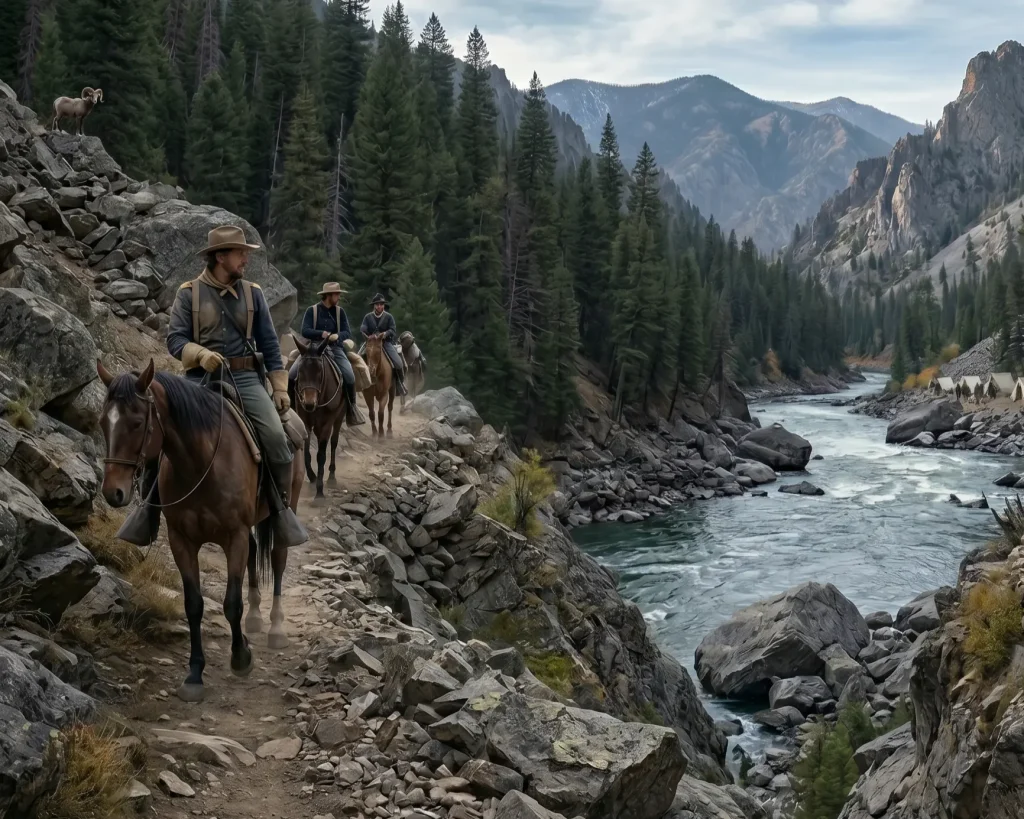
The Tukudeka’s isolation in the mountains ultimately could not protect them. In the summer of1879, a series of violent incidents in the Salmon River Mountains were blamed on a small group of Sheepeaters, and the U.S. Army launched a campaign against them, the last armed conflict between the U.S. military and Native people in Idaho.
The campaign was frustrating for the Army. Small detachments of soldiers struggled to pursue the Tukudeka through terrain the Native people knew intimately. After months of difficult campaigning, approximately 51 Tukudeka (including women, children, and elders) finally surrendered, exhausted and starving. They were relocated to the Fort Hall and Lemhi Reservations, severing a connection to the canyon that stretched back millennia.
“They were the last free people in Idaho, mountain dwellers who had
outlasted every other band simply by knowing their canyon better than any
army ever could.”
– Idaho historical accounts of the Sheepeater War
The Nez Perce: Also of the River
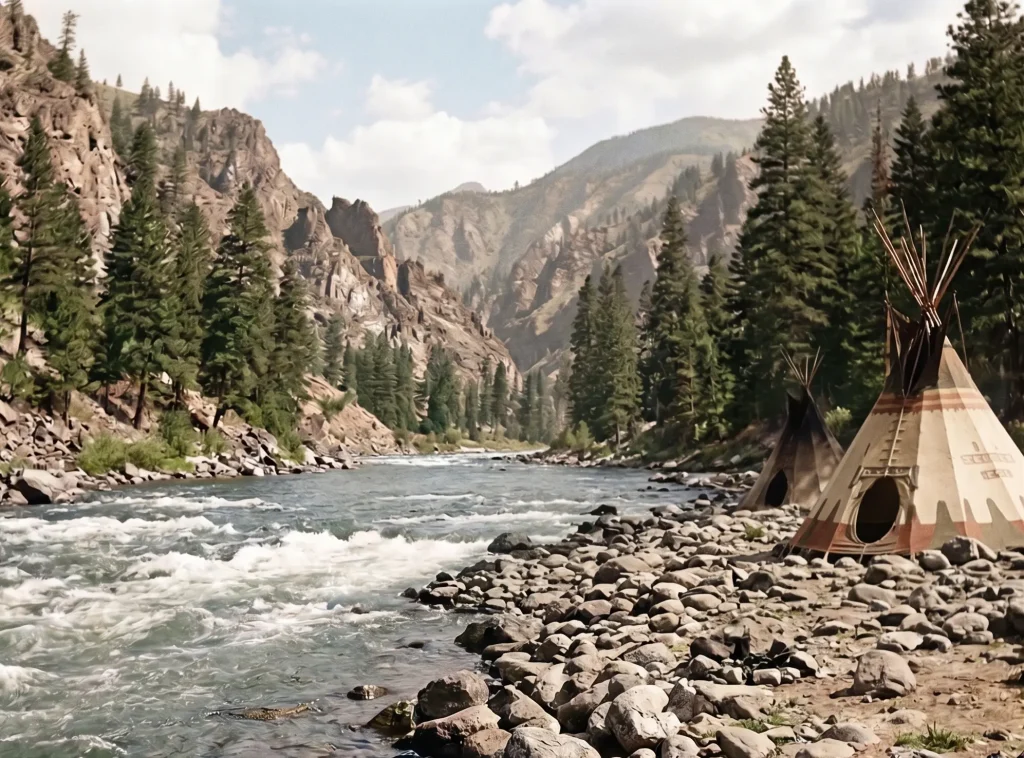
The Tukudeka were not the only Native people with deep ties to the Salmon River country. The Nez Perce had long used the canyon as a fishing ground, a travel corridor, and a place of spiritual significance. The great Chinook salmon runs that drew settlers’ admiration had first sustained Nez Perce communities for thousands of years. The tragic events of 1877, when Chief Joseph’s band fled through the region during the Nez Perce War, marked a turning point that reshaped who could call the canyon home.
Gold, Grit, and the First Settlers
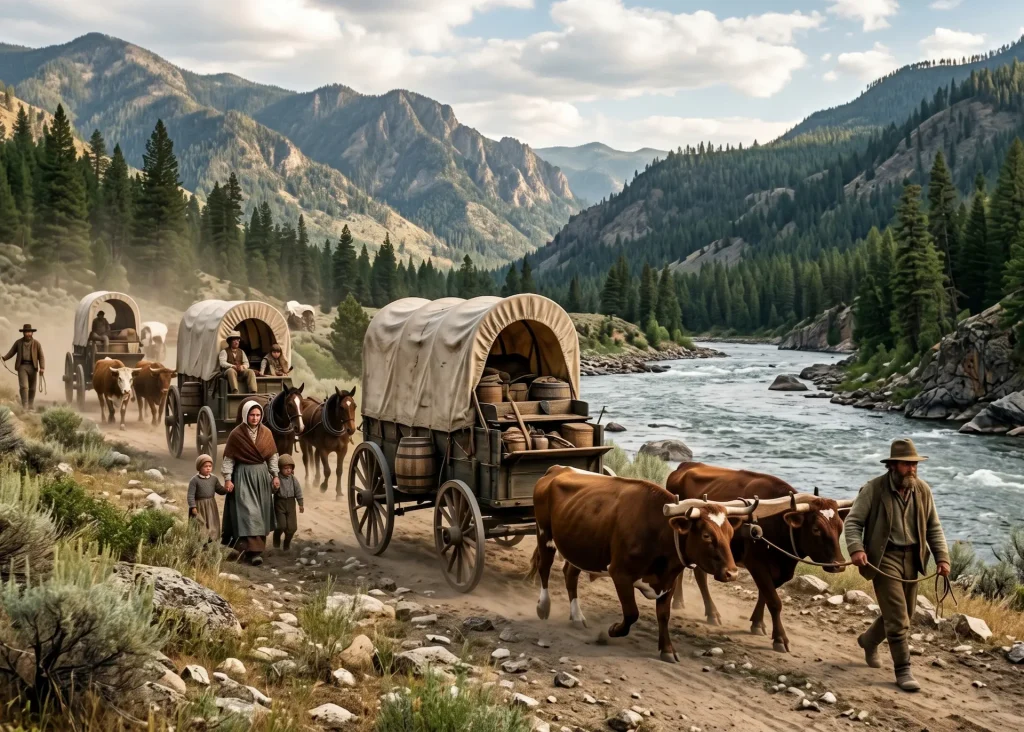
The first non-Native people drawn into the Salmon River canyon came chasing gold. Following the great Idaho gold rushes of the 1860s, prospectors fanned out across the backcountry, panning every gravel bar and probing every gulch. Most found only hard labor for thin reward. But a few stayed on even after the gold faded; people who found something they hadn’t expected: a fierce attachment to the land itself. The canyon’s strange beauty, the hot springs steaming from the walls, the abundance of deer and elk; it had a hold on certain people that no common sense could shake loose.
- The River By The Numbers
The Salmon runs 425 miles through Idaho, dropping 7,000 feet in elevation, one of the longest undammed rivers in the lower 48.
Building a Life in the Canyon
The homesteads that took root along the Main Salmon in the 1880s and 1890s were marvels of self-sufficiency and improvisation. Settlers cleared small benches above the river for gardens and orchards. The canyon’s sheltered microclimate allowed apple and pear trees to thrive, and the river provided Chinook salmon in numbers that would seem almost mythical today.
William M. Mackay and the Founding of Mackay Bar
One of the most enduring legacies of the canyon’s homestead era sits at a wide gravel bar near the confluence of the South Fork of the Salmon, a place now known simply as Mackay Bar. William M. Mackay first arrived at the site in 1890, drawn like so many others by the promise of the canyon country. Together with his business partner, W.S. Howenstine, he set about turning a remote river bar into a working property: constructing buildings, establishing an orchard, and eventually cultivating some 15 acres of the benchland above the river.
The work of Mackay and Howenstine represents the homestead era at its most patient and determined. Both men would spend the rest of their lives developing the property, and both died in 1920, two years before the federal government completed the official survey of their claim. The federal patent to the land, issued under Homestead Entry Survey 537, was granted posthumously in 1922. In his will, Mackay left the property to his friend Perry Nethkin, who settled the estate in 1923 and became the next steward of the bar that still bears Mackay’s name.
Today, Mackay Bar Ranch endures as one of the most storied properties on the Main Salmon. Accessible only by jet boat, raft, small aircraft, or a seasonal backcountry road; a living testament to the two men who first cleared its ground more than 130 years ago.
Other Notable Settler Families
Mackay and Howenstine were not alone in their canyon ambitions. The Shepp Ranch, established in the early 1900s by Charlie Shepp and Pete Klinkhammer, became one of the most famous outposts in Idaho backcountry history. The two men ran cattle, trapped through the winters, and built a reputation for hospitality that drew guests from across the country. Elsewhere along the river, William Campbell homesteaded Campbell’s Ferry, running a river crossing that helped thousands of miners reach the Thunder Mountain mining district.
Supply Lines and the Float Boats
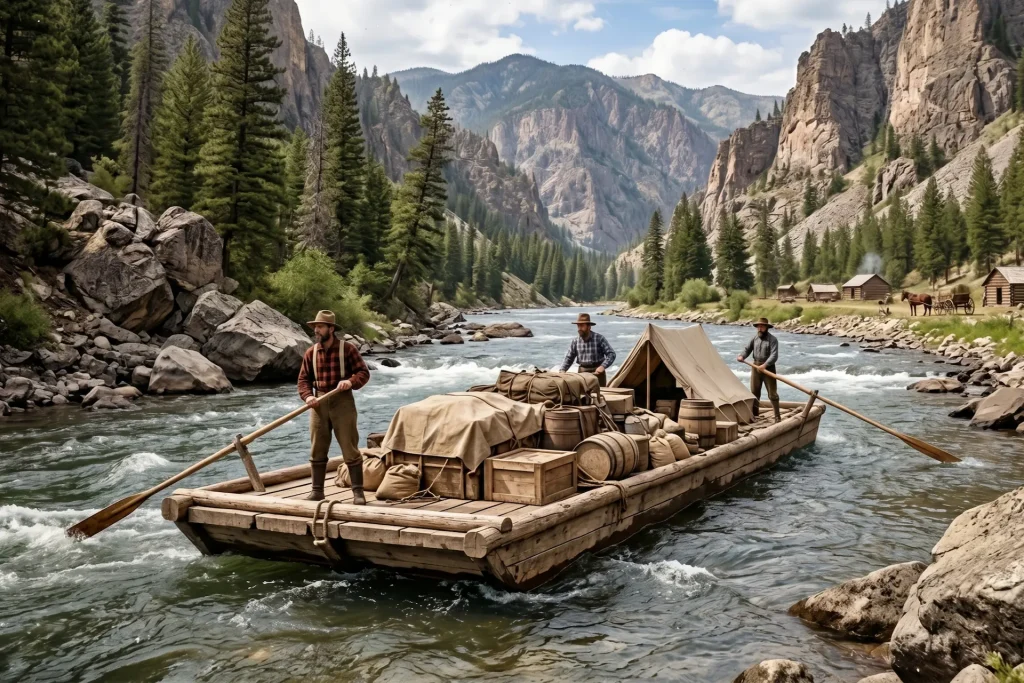
One of the defining features of life on the Main Salmon was dependence on the river as a supply route, in one direction only. Freight was floated in on wooden scows guided by fearless rivermen who learned to read the rapids. They went downstream loaded with flour, sugar, tools, and dynamite. They did not come back the same way. Pack trains by mule over the high trails brought goods from the canyon rim down to the ranches. The trails were steep and narrow, and a lost pack animal could spell genuine hardship. Settlers learned to plan a year ahead, to stock deep larders, and to waste nothing.
A Timeline of the Canyon
| Thousands of years | Tukudeka (Sheepeater) people inhabit the Salmon River canyon, developing a sophisticated culture centered on bighorn sheep hunting. |
|---|---|
| 1860s | Gold rush prospectors enter the Salmon River drainage; first systematic Euro-American exploration of the canyon country. |
| 1877 | The Nez Perce War. Chief Joseph’s band flees through the region; Army campaigns across Salmon River country. |
| 1879 | The Sheepeater War, the last U.S. military campaign against Native people in Idaho. Surviving Tukudeka are relocated to reservations. |
| 1880s | First permanent homesteads established. Ranchers and farmers begin clearing benches along the river. |
| 1890 | William M. Mackay arrives at the gravel bar that will bear his name, partnering with W.S. Howenstine to build what becomes Mackay Bar Ranch. |
| 1920-1922 | Both Mackay and Howenstine die before the federal survey is complete. The patent is issued posthumously in 1922 under Homestead Entry Survey 537. |
| Early 1900s | Shepp Ranch and Campbell’s Ferry established. Float-boat freight trade at its peak. |
| 1930s-40s | Sport hunting and fishing tourism arrives. Bush pilots begin landing on wilderness airstrips. |
| 1980 | The Frank Church–River of No Return Wilderness Act designates the canyon as protected wilderness, the largest in the lower 48. |
The Legacy They Left Behind
Most of the original homesteads are gone now, reclaimed by brush and weather, or absorbed into the Frank Church–River of No Return Wilderness. A few structures survive: the Shepp Ranch still stands, maintained as a historic property. Old orchards, gone wild, still produce apples in the canyon each fall. And at Mackay Bar, the ranch that William Mackay and W.S. Howenstine carved from the river bench in 1890 endures, still accessible only to those willing to fly in, float in, or ride the long backcountry road down from the rim.
And on the ridges high above the river, the stone hunting blinds and game-drive walls of the Tukudeka endure as well, older than any cabin, older than any orchard, a reminder that the settler story is only the most recent chapter in a canyon that has sustained human life for a very long time. The early settlers of the Salmon River country were not always heroic, not always wise, and certainly not always right in their relationship to the land and its original peoples. But their attachment to this particular canyon was as authentic as human emotion gets. They were people who looked at a place that offered every reason to leave, and chose, year after year, to stay.
The Main Salmon River flows 425 undammed miles through the heart of Idaho. The Frank Church–River of No Return Wilderness, established in 1980, protects over 2.3 million acres of the surrounding country, the largest wilderness area in the contiguous United States.